
Apple Pay UK Shake-Up: CMA Proposes Rival iPhone Tap-to-Pay Apps
UK regulator proposes opening iPhone NFC access to Apple Pay rivals. What it means for Revolut, PayPal and British consumers — and when rules might change.
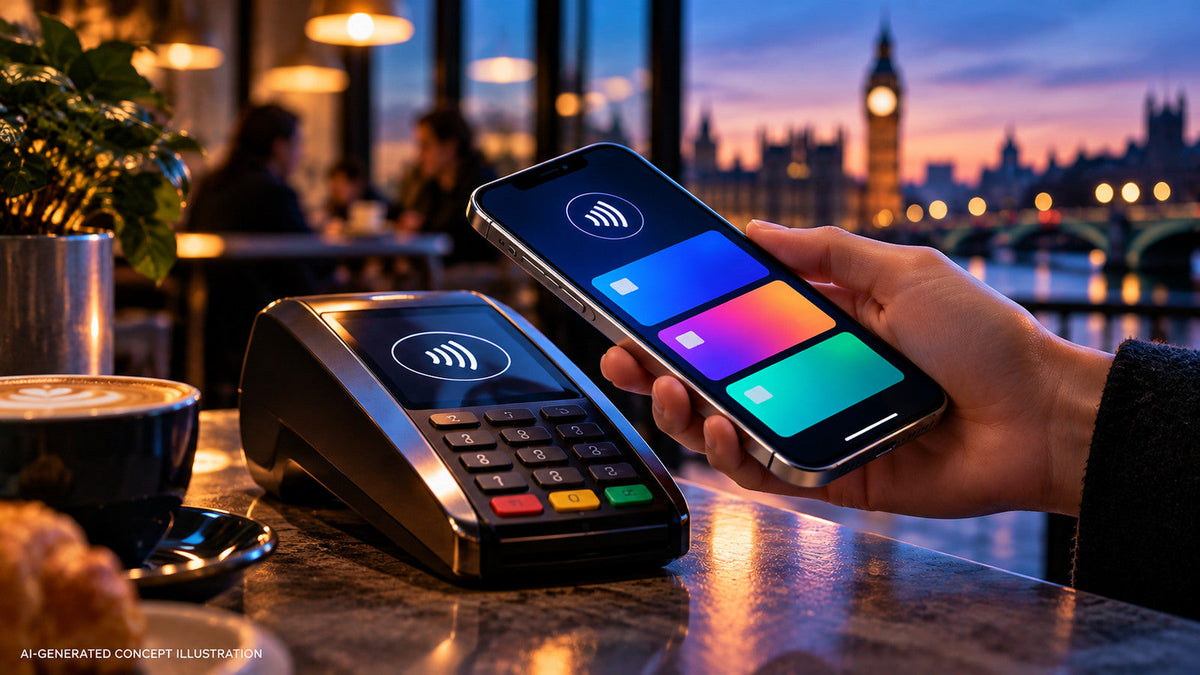
Britain's competition watchdog wants to make it easier for rival digital wallets to offer tap-to-pay services on iPhones. In proposals published on 20 October 2026, the Competition and Markets Authority (CMA) said Apple's fees and technical terms could discourage UK financial technology businesses from building competing contactless products. If adopted, the changes could eventually give iPhone owners more choice over how they pay in shops. Nothing changes for Apple Pay users immediately.
The proposal is open for consultation until Tuesday 17 November 2026. A final decision will follow consideration of the responses; the CMA has not announced a date for any new rules to take effect.
What is the UK proposing for Apple Pay?
The CMA wants Apple to give third-party developers access to the iPhone's near-field communication (NFC) technology on fair, reasonable, transparent and non-discriminatory terms. NFC is the short-range technology that lets a phone or bank card communicate with a payment terminal.
Apple already offers authorised UK developers access to its NFC & Secure Element Platform for certain transactions, including in-store payments. Developers must meet eligibility requirements, sign agreements and comply with commercial and security terms. The CMA says some UK businesses consider those arrangements too expensive or restrictive to support competitive products.
The watchdog's proposal has two parts: access to both major technical approaches used for contactless services, and principles intended to make the commercial terms viable for more developers. The CMA is not proposing to set a fixed access price; it expects charges to be substantially lower than Apple's current fees while still rewarding Apple for providing access.
Could Revolut, PayPal or another app replace Apple Pay?
Potentially — but only if the regulatory proposals proceed and individual companies decide to launch compatible services in the UK. A more open NFC system could allow an eligible payment provider to build a wallet that communicates with a contactless terminal without requiring the customer to use Apple Pay or Apple Wallet.
The CMA points to developments in the European Union, where alternative payment apps have emerged following changes to Apple's NFC access. It cites providers including Vipps, PayPal, Klarna, Curve and BBVA. That does not mean all these companies have announced equivalent UK iPhone payment apps.
Revolut welcomed the UK proposals, according to Reuters, highlighting the importance of the alternative technical method for fintech competition. The eventual outcome will depend on the final rules, commercial viability, banking partnerships and individual product decisions.
Secure Element versus HCE: what is the difference?
The distinction is central to the proposals:
| Technology | How it works | What the CMA wants |
|---|---|---|
| Secure Element (SE) | A dedicated protected hardware environment can handle sensitive payment credentials. | Commercially workable access for eligible third-party developers. |
| Host Card Emulation (HCE) | A software-based approach to card emulation, without relying on the same on-device Secure Element arrangement. | Availability alongside SE as another technical option. |
The regulator says the evidence it has seen does not suggest either established method is inherently unsafe. That is not a guarantee that every future app will be equally secure: authentication, fraud controls, data handling and implementation will still matter.
Why does this matter to UK consumers?
Contactless payments are now part of everyday life. The CMA cites UK Finance figures showing that contactless cards and mobile payments together accounted for 39% of all UK payments in 2025, compared with just 3% a decade earlier. It also cites research indicating that more than 60% of UK adults use a digital wallet, with Apple Wallet the most popular.
A wider choice of payment providers could eventually lead to different rewards, account-to-account payments, spending controls or loyalty features. Better access to NFC could also help developers build travel passes, digital identity products and hotel or workplace keys.
These are potential benefits, not confirmed product launches. Lower access charges for developers do not automatically translate into lower shop prices, reduced bank fees or cashback for consumers.
Will Apple Pay stop working?
No. The CMA is proposing greater access for competitors, not the removal of Apple Pay. UK users do not need to remove payment cards, reset their iPhones or change payment apps because of the consultation.
Even if new wallets eventually launch, consumers would need to check whether their bank, card issuer, device and preferred payment method are supported. More open technology does not mean every provider will offer every feature.
What does Apple say about privacy and security?
Apple argues that its existing NFC & Secure Element Platform already supports secure contactless experiences for authorised third-party developers, including payments, transit and event tickets. In comments reported by Reuters, Apple expressed concern that a different approach could weaken privacy or security protections.
The CMA takes a different view of the evidence, saying both SE and HCE are established contactless technologies and neither is inherently insecure. The practical policy challenge is to combine effective competition with appropriate security requirements — rather than assuming either greater openness or tighter restrictions are automatically safer.
For consumers, the sensible precautions remain familiar: use reputable payment apps, keep iOS updated, protect your phone with Face ID, Touch ID or a strong passcode, and review a provider's data practices before switching.
Is the UK simply copying the EU?
Not exactly. The EU's 2024 commitments required free access to an HCE-based payment solution for qualifying developers. The CMA's UK approach would make both SE and HCE available, while consulting on fairer commercial principles rather than simply mandating zero fees.
Those differences matter for developers and may affect which companies decide a UK wallet launch is commercially worthwhile. The UK has its own process and no final requirement has yet been imposed under this consultation.
When could rival iPhone wallets arrive in Britain?
The consultation opened on 20 October 2026 and closes on 17 November 2026. The CMA says it will consider submissions before making a final decision. There is no verified implementation date and no confirmed UK launch date for a new competitor to Apple Wallet as a result of these proposals.
Three developments are worth watching: the CMA's final decision, any changes to Apple's UK developer terms, and official announcements from banks or payment providers. Until then, headlines suggesting rival wallets are already launching in the UK should be treated cautiously.
Frequently asked questions
Is Apple Pay being banned in the UK?
No. The CMA wants to make it easier for rivals to compete with Apple Pay, not ban it.
Can I use a Revolut card with Apple Pay today?
Supported Revolut cards can be added to Apple Pay. That is different from Revolut operating a standalone iPhone tap-to-pay wallet outside Apple Pay.
Will contactless payments become cheaper?
Not necessarily. The CMA expects lower access fees for developers if its proposals are adopted, not guaranteed savings for shoppers.
Will I need a new iPhone?
No hardware upgrade has been announced as part of the consultation. Future wallet apps, if launched, may have their own compatibility requirements.
When will the UK make its decision?
The consultation closes on 17 November 2026. The CMA has not given a final decision or implementation date.
Sources and further reading
- Competition and Markets Authority: iPhone NFC proposals, 20 October 2026
- CMA: formal consultation on Apple's NFC access, 20 October 2026
- Reuters: Britain seeks to loosen Apple's grip on contactless payments, 20 October 2026
- Apple Developer: existing NFC & Secure Element Platform access
Image disclosure: The featured image is an original AI-generated concept illustration, not an official Apple image or a screenshot of a released competing wallet. This article covers a regulatory consultation, not a new product launch. No affiliate links are included.